Cleans pipes from inside
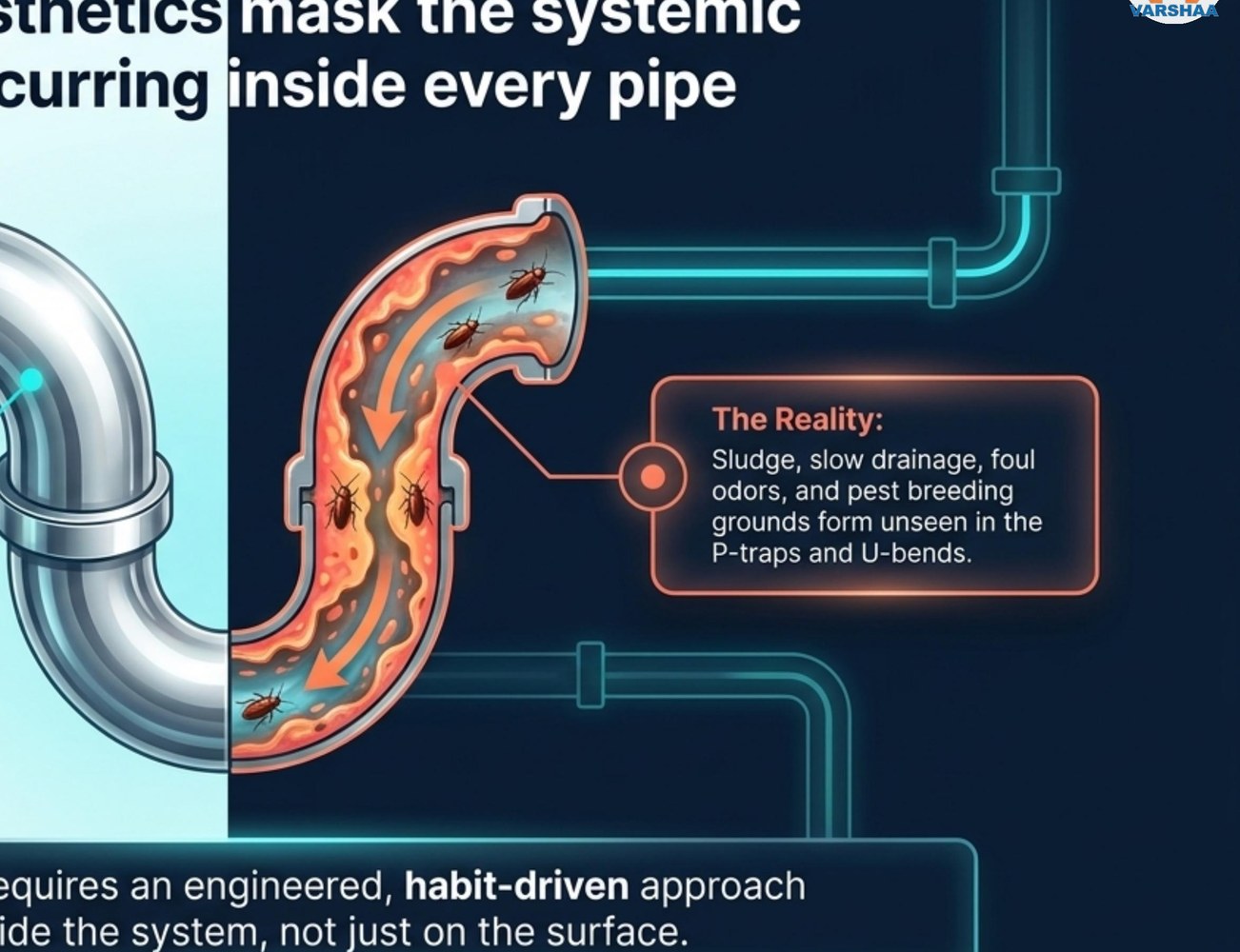
Reaches P-traps and U-bends that surface cleaning cannot touch.
Varshaa Sewclean · Scientific proof of concept
Managing a 700,000-litre biological loop through NABL-verified environmental science—from one weekly household habit to shared infrastructure at society scale.
Who does it?
Every system that keeps smell, blockage and decay away—a home drain, a society STP, a monument’s stone, a dairy digester or an animal’s skin—depends on one consistent variable.
Pour weekly. Prevent blockage. Save money. Live problem-free.
Reaches P-traps and U-bends that surface cleaning cannot touch.
Cuts odour at the biological source instead of masking it.
Reduces blockage risk before it becomes an emergency repair.
Addresses cockroaches, ants, mosquitoes and flies at the source.
An eco-conscious formula designed for pipes and septic systems.
Controls corrosion-risk chemistry and descales metal fixtures.
Engineered scalability
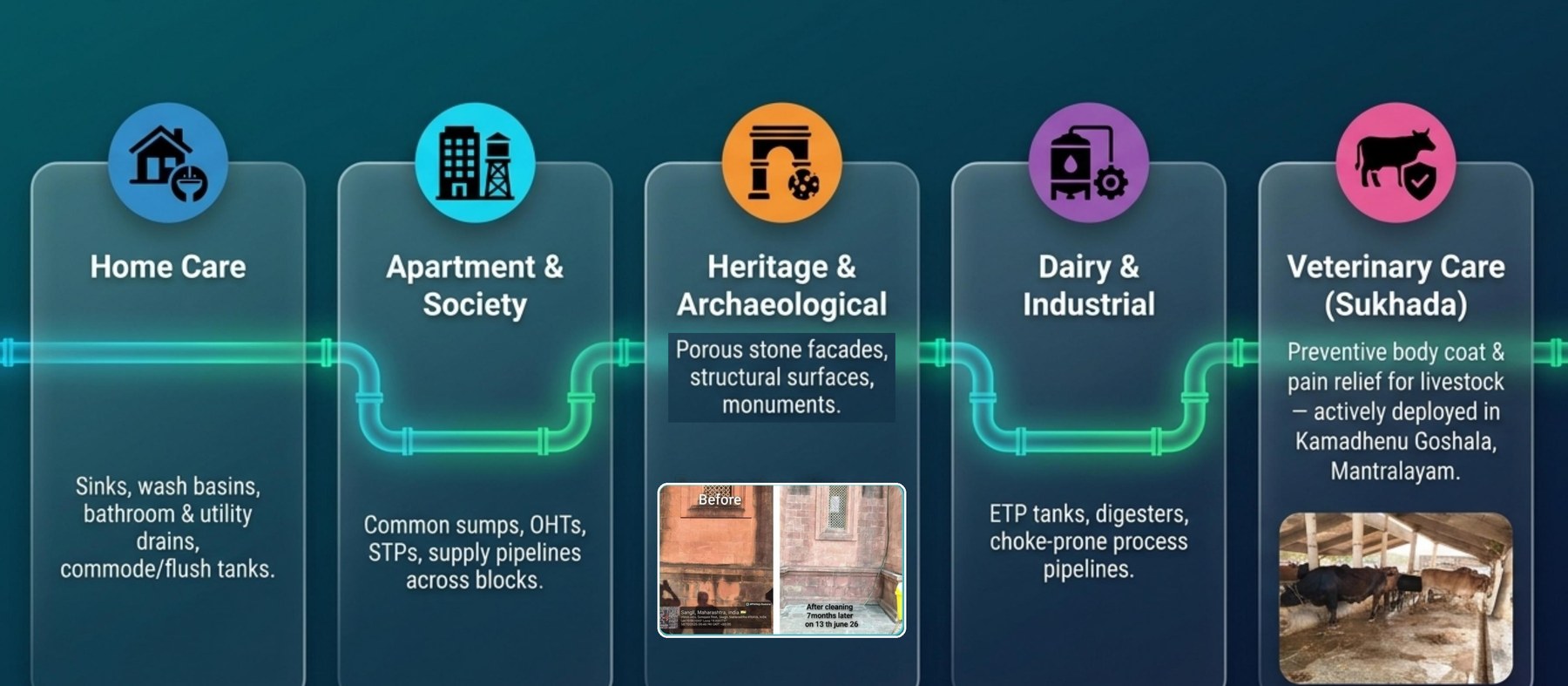
Sinks, wash basins, bathrooms, utility drains, commodes and flush tanks.
Common sumps, overhead tanks, STPs and supply pipelines across blocks.
Porous stone façades, structural surfaces and monuments.
ETP tanks, digesters and choke-prone process pipelines.
Preventive body coat and pain relief for livestock, deployed at Kamadhenu Goshala, Mantralayam.
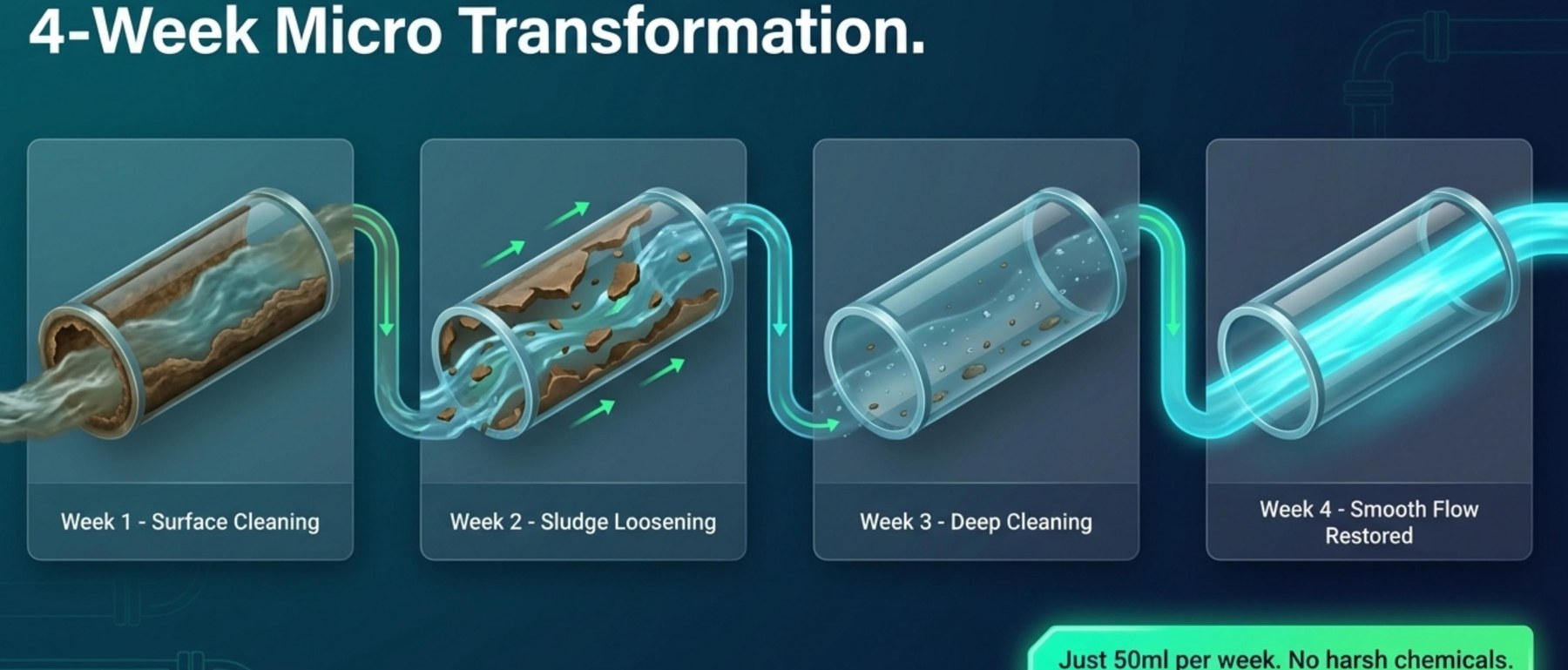
The micro transformation
Just 50 ml per week. No harsh chemicals. Designed for septic systems.
Citadel Society challenge
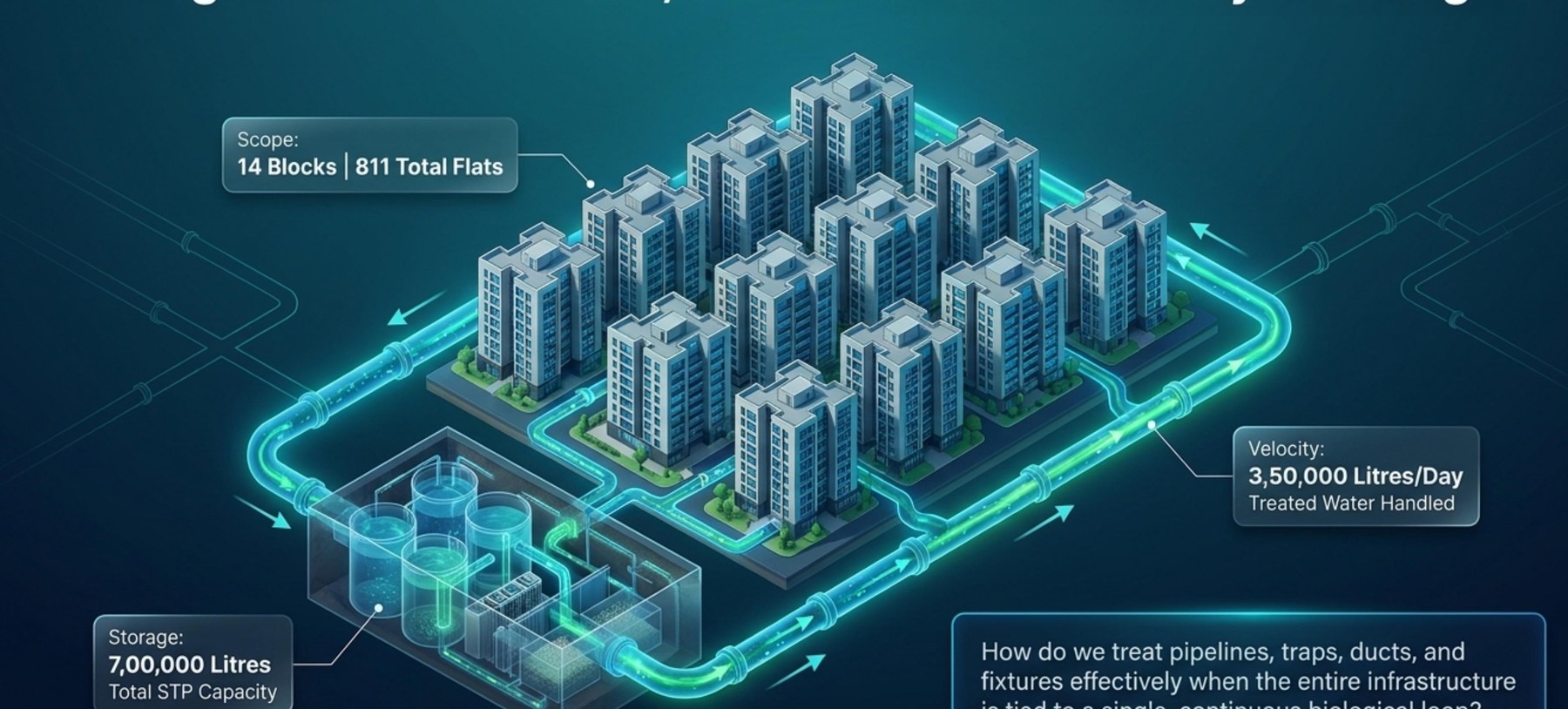
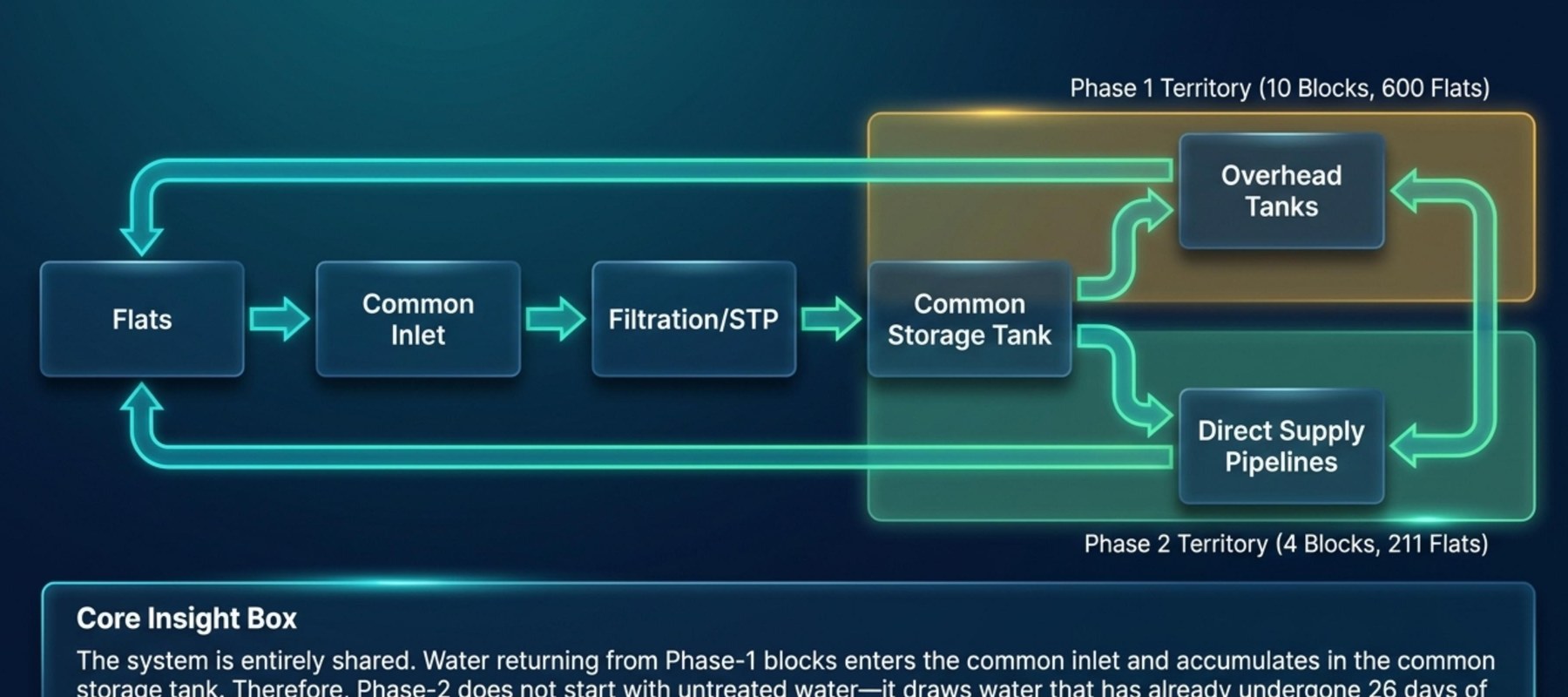
The connected system served 14 blocks and 811 flats, handling 350,000 litres of treated water every day across a total STP capacity of 700,000 litres.
The scientific trial
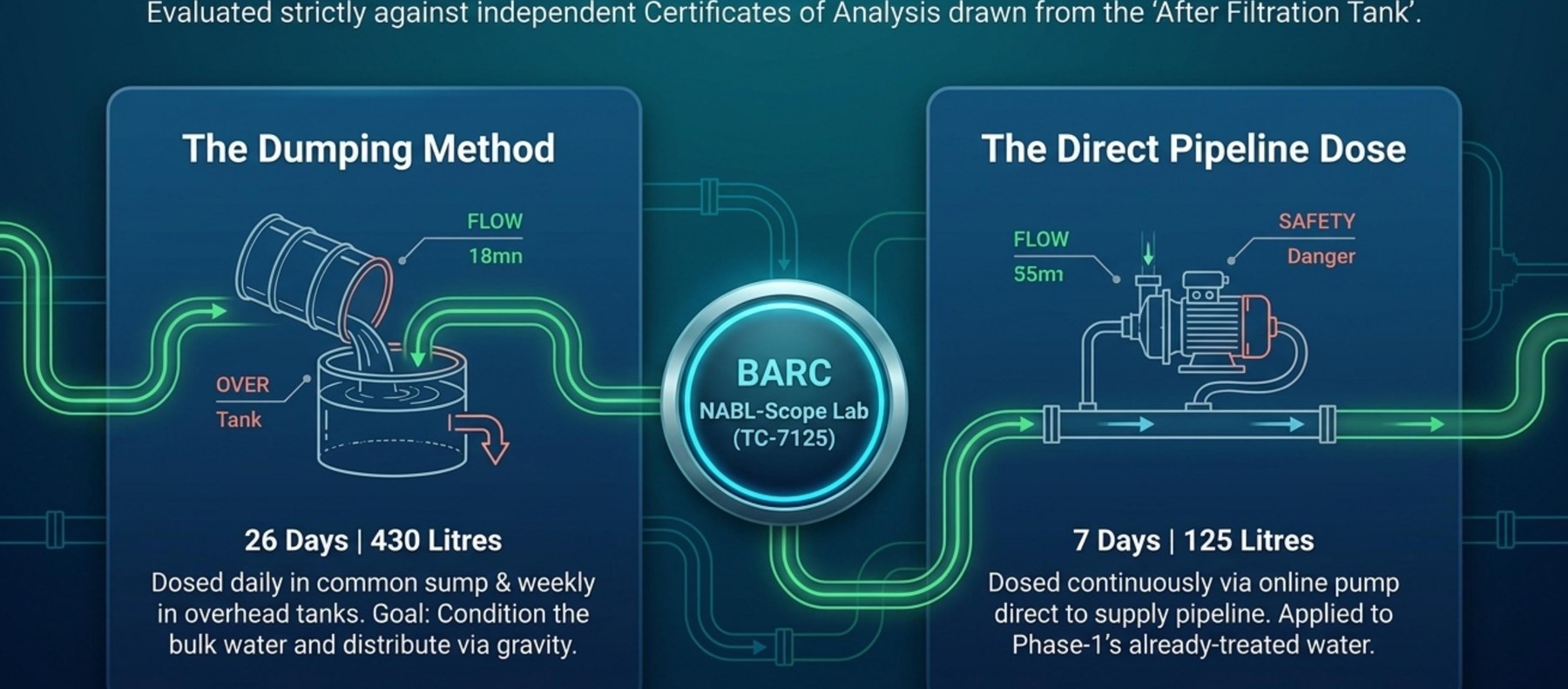
The evaluation used independent Certificates of Analysis drawn from the after-filtration tank. Bulk-water dumping ran for 26 days using 430 litres. Direct pipeline dosing ran for seven days using 125 litres on already-treated water.
Measured phase results
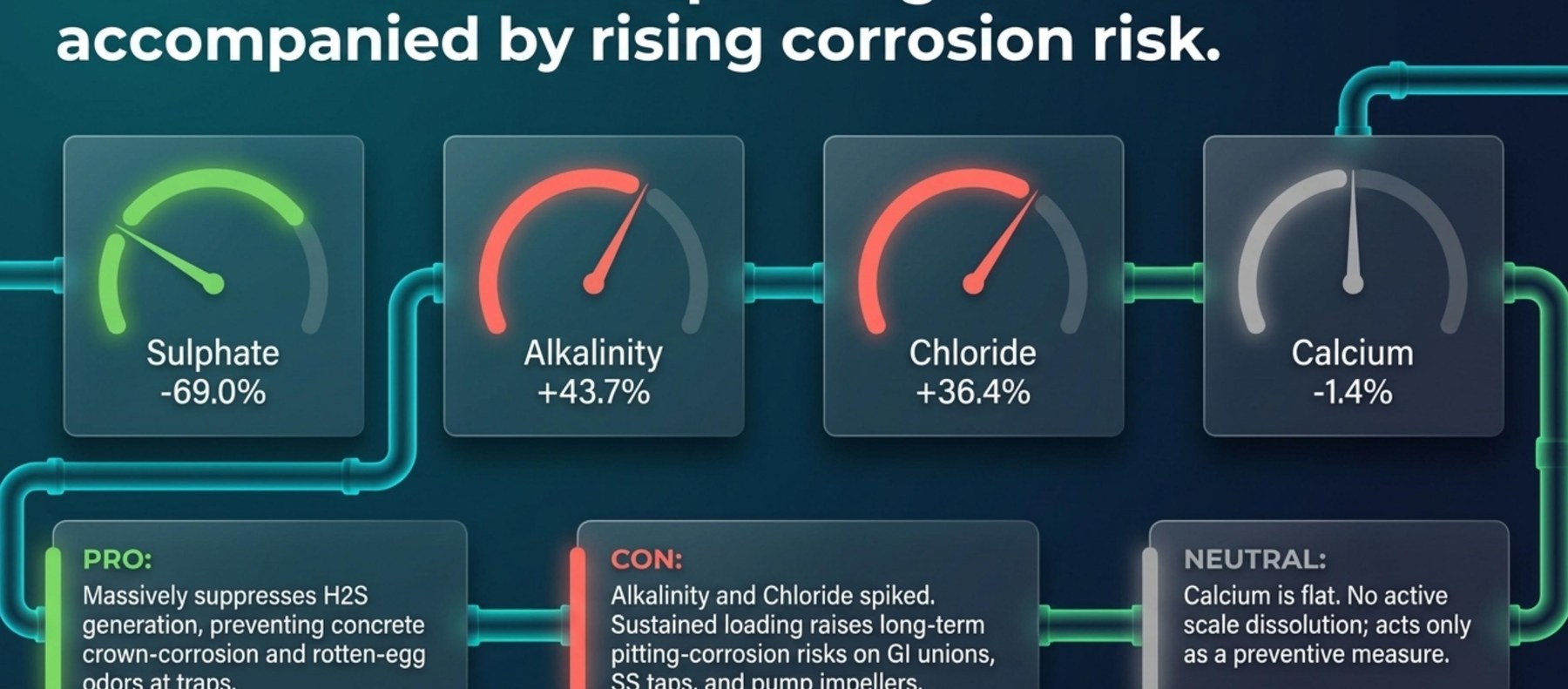
Phase 01 · Biological base layer
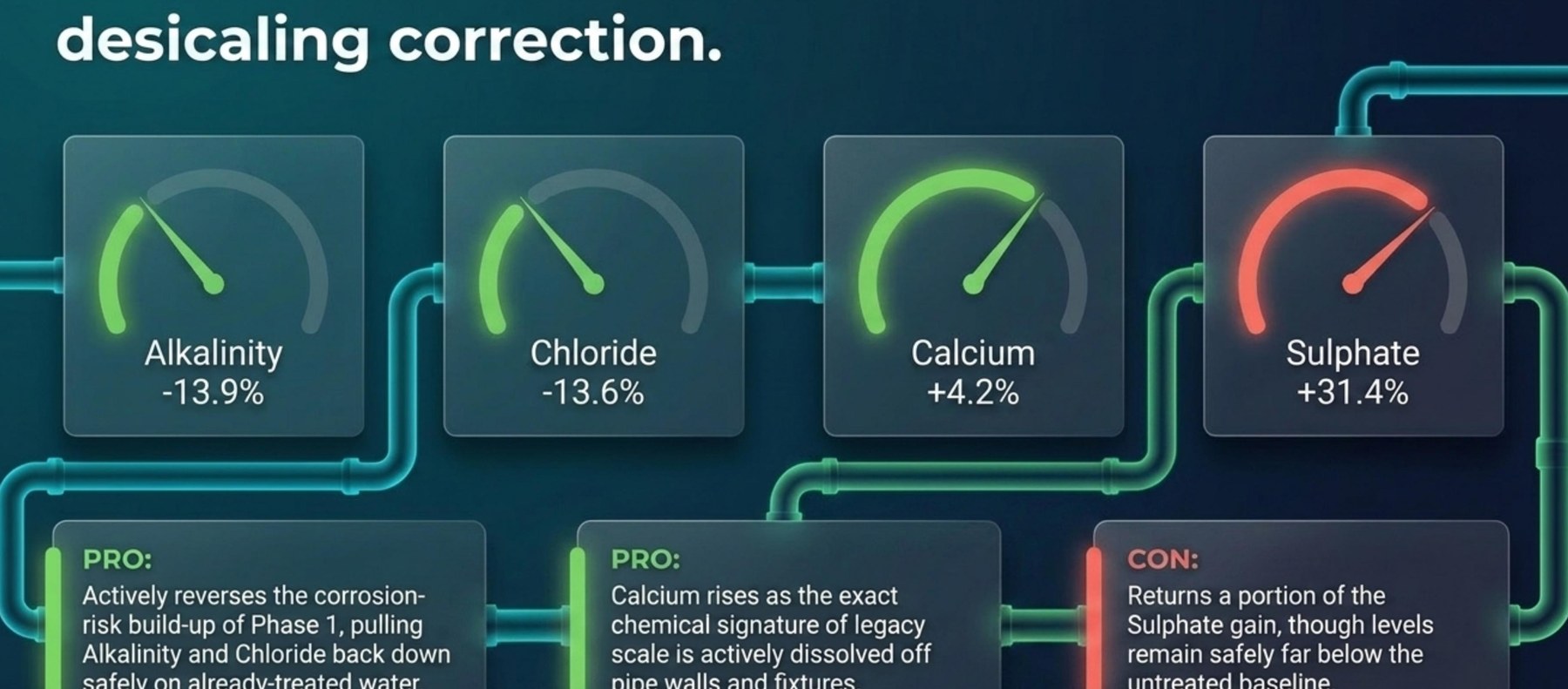
Phase 02 · Active correction
Phase 1 provides the biological base layer for odour and organic decay. Phase 2 provides the counter-weight—correcting alkalinity and chloride while actively dissolving legacy scale.
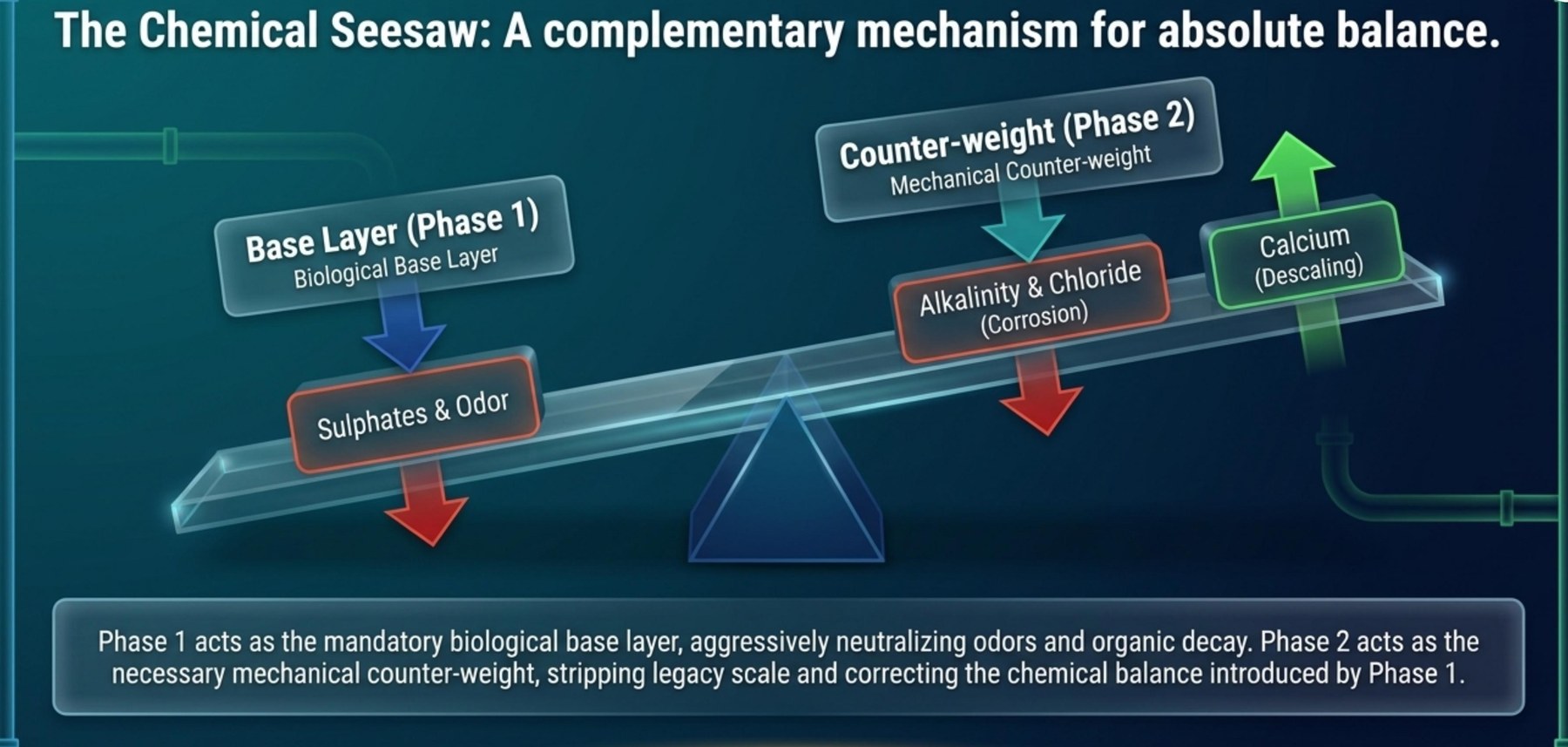
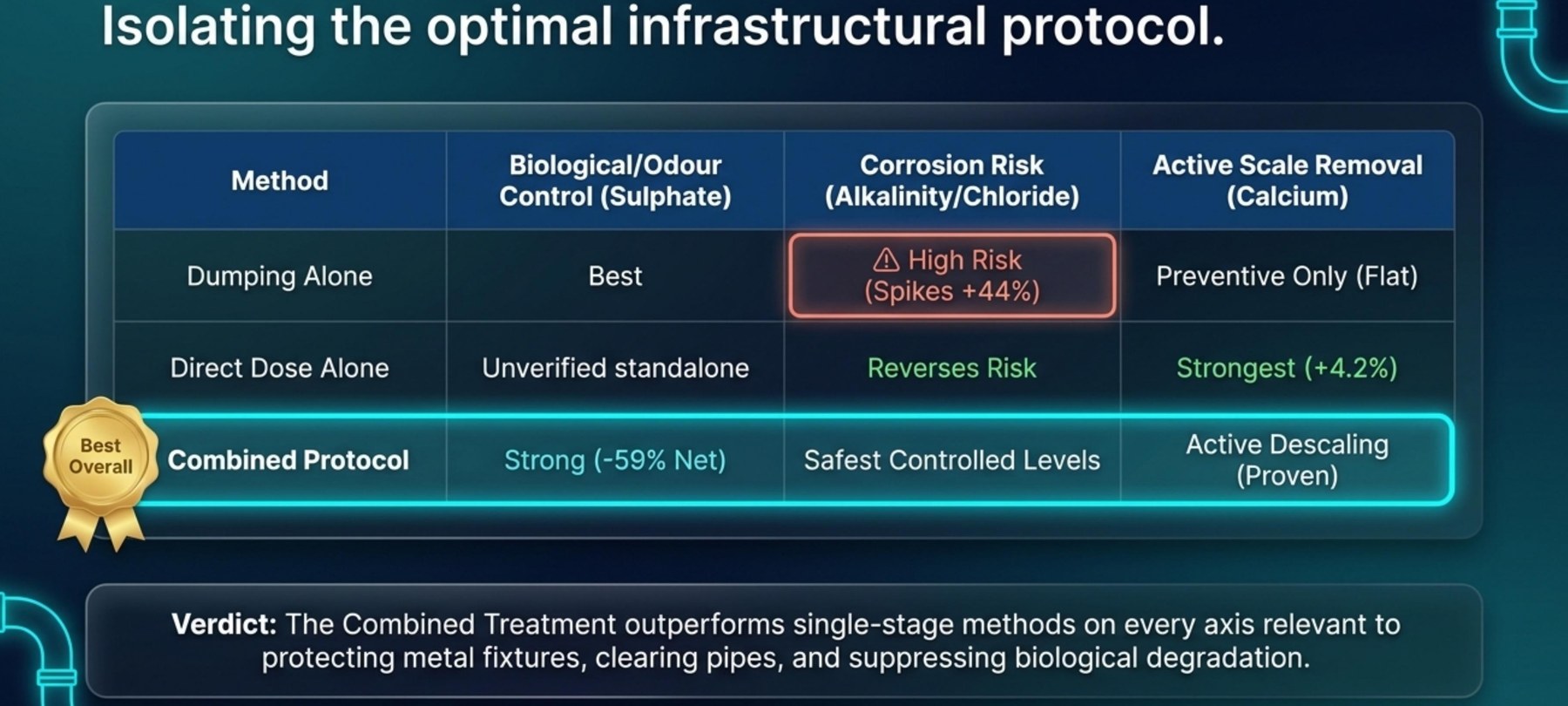
Method showdown
Dumping alone gives the strongest biological control but raises corrosion-risk indicators. Direct dosing provides the strongest active descaling and reverses that risk. Together they produced strong net biological control, safer controlled levels and proven active descaling.
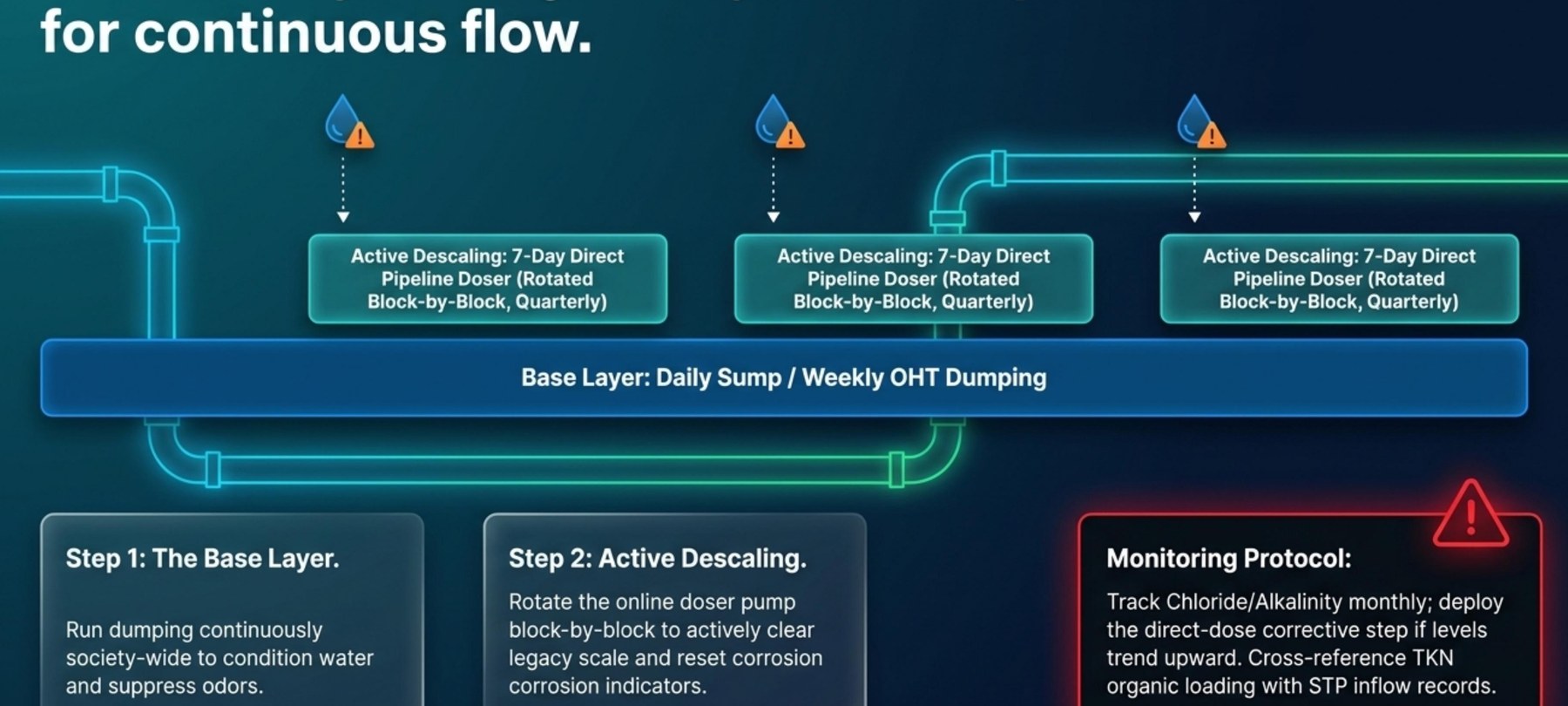
Facility manager’s blueprint
Smart habit · Happy home